In common with many people, the Fort des Rousses was not on my radar until Mark Watts told me about it when driving back from a hike. So, Richard Saynor, Bill Westermeier and I with our wives went on an exploratory walk following which the proposal for this walk, lunch and visit was made.
Nicolas U, Drew M, Robert O’R, John B and myself met at the usual Divonne customs car park and motored up to les Rousses on what promised to be a hot day for most of the time.
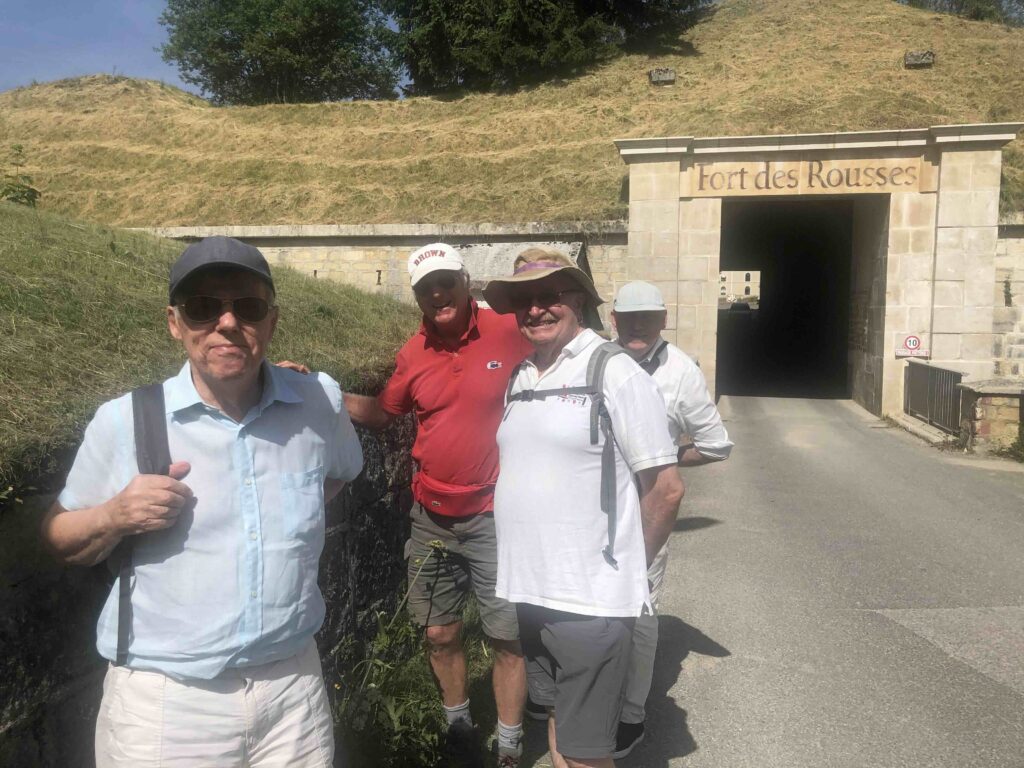
The Fort des Rousses is the second largest fort in France and is hardly visible until you come to and enter it through a narrow tunnel. The Fort itself was built from 1843 to 1862 and was capable of housing 3,500 men and 2,000 horses, with 50,000 sq. m of vaulted rooms, many kilometres of underground galleries, 2.2 km of ramparts etc. With a gap in military use between the two wars, it was finally abandoned by the military in 1997 and sold to the local Commune, which rented out a part to a cheese company for maturing its comté cheese.
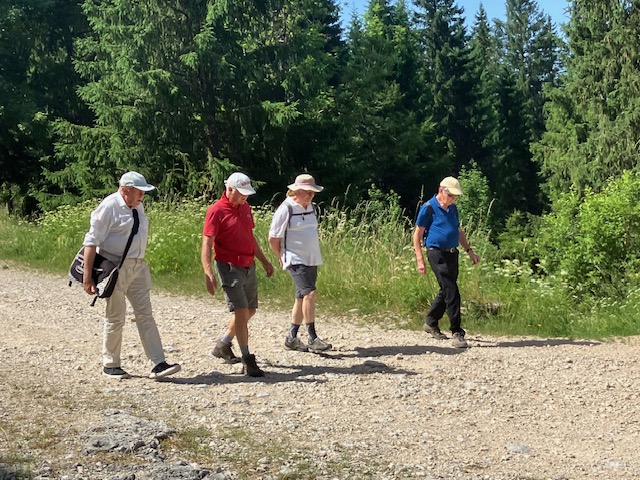
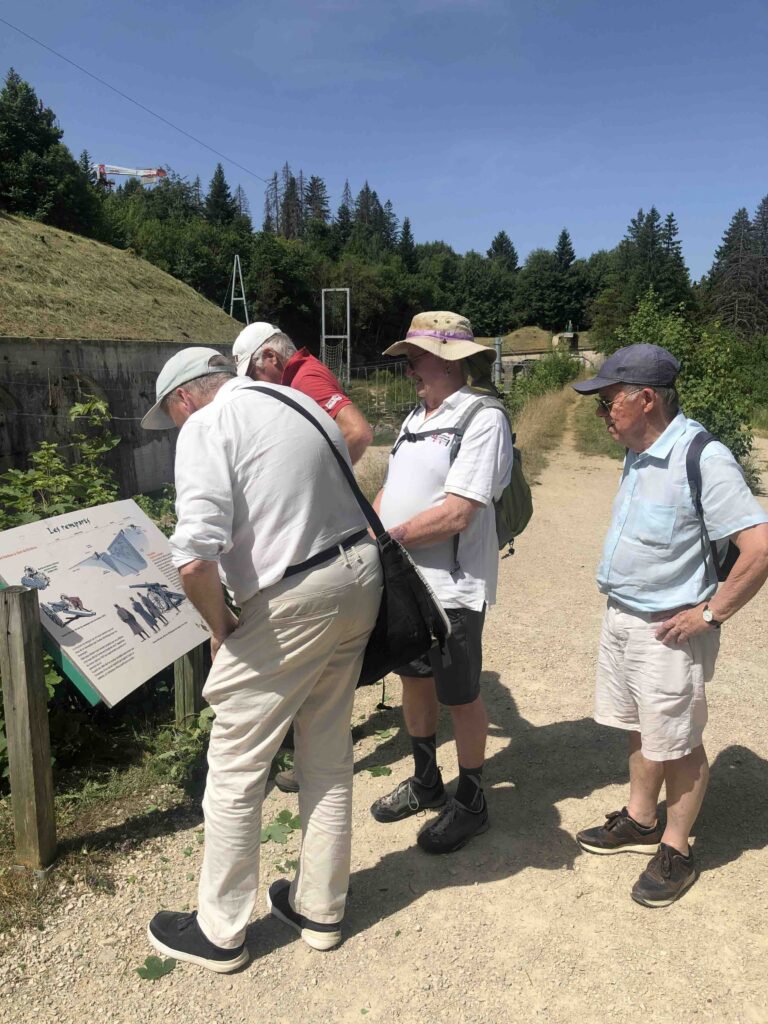
The walk of about 3 km was around its walls on a rough road/good trail that revealed views over the Dôle side of the Jura. There were occasional plaques explaining the history of the fort; towards the end the road was closed for restoration work on the ramparts which entailed a deviation through a very welcome shaded path in the woods. We then came upon a commando course which was unfortunately closed so we couldn’t climb up various ropes or use any of its three zip wires!
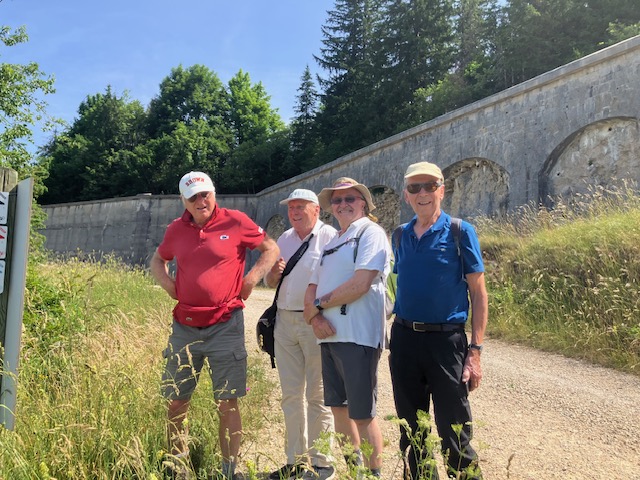
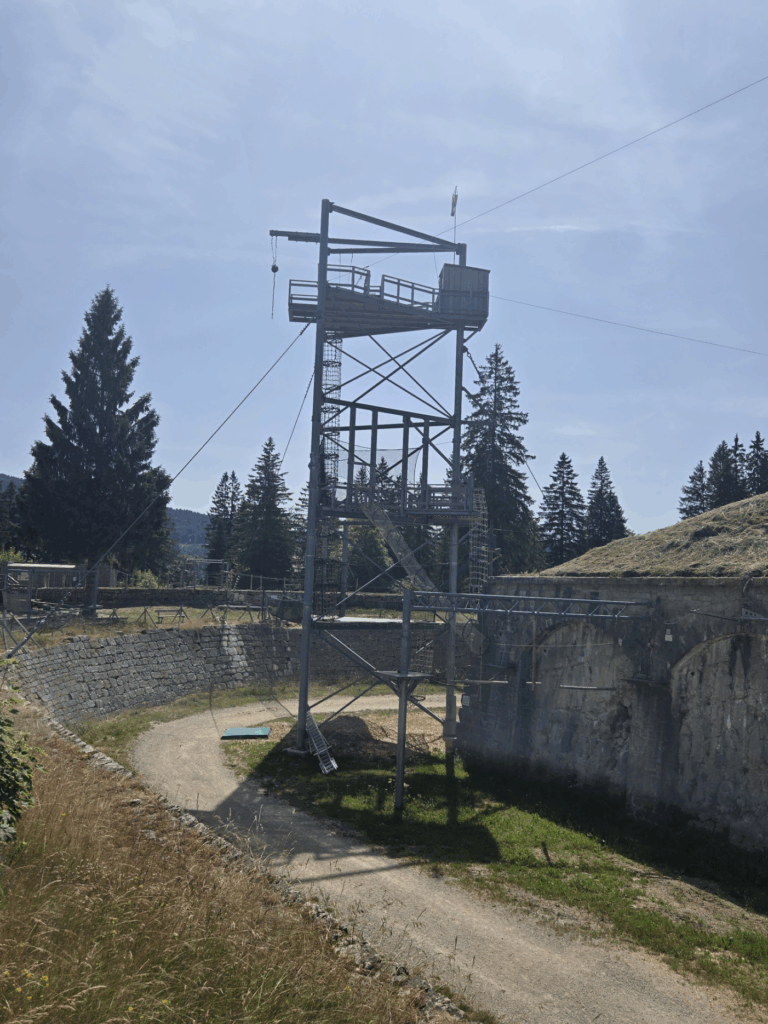
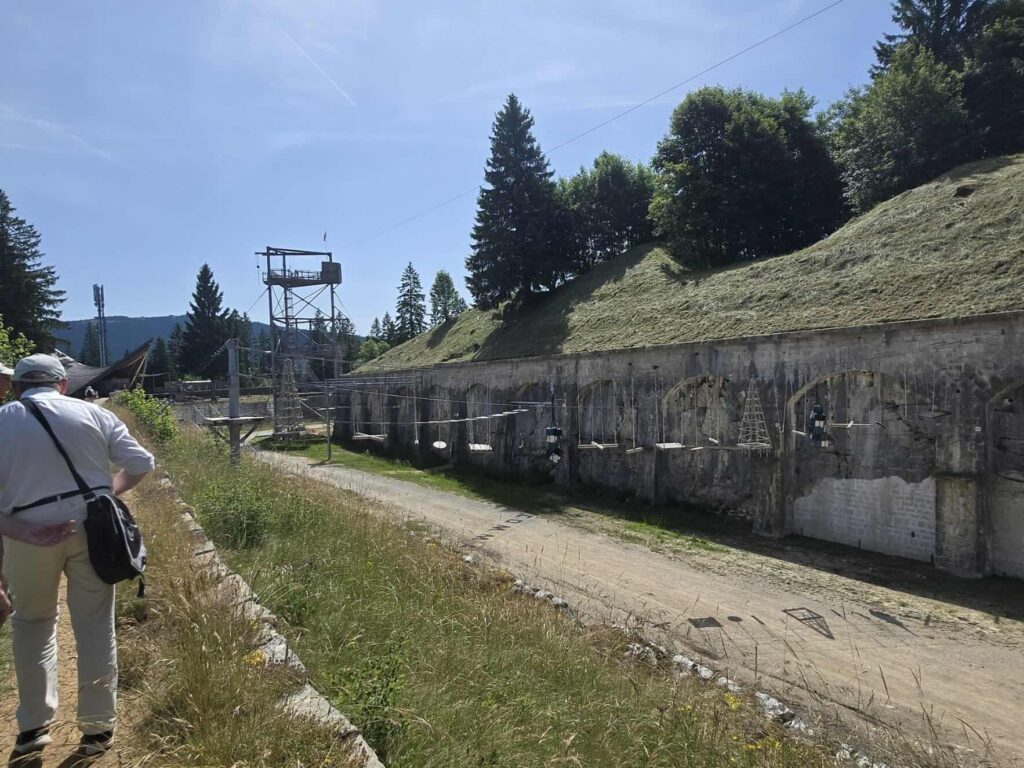
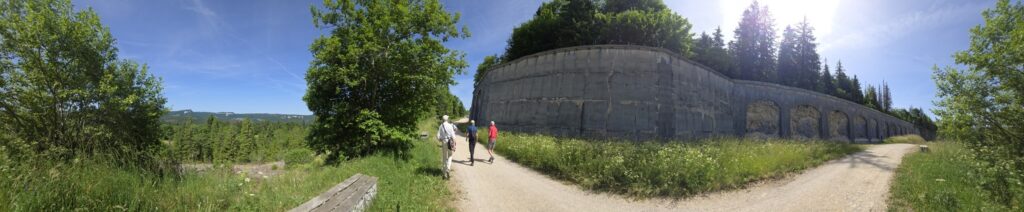
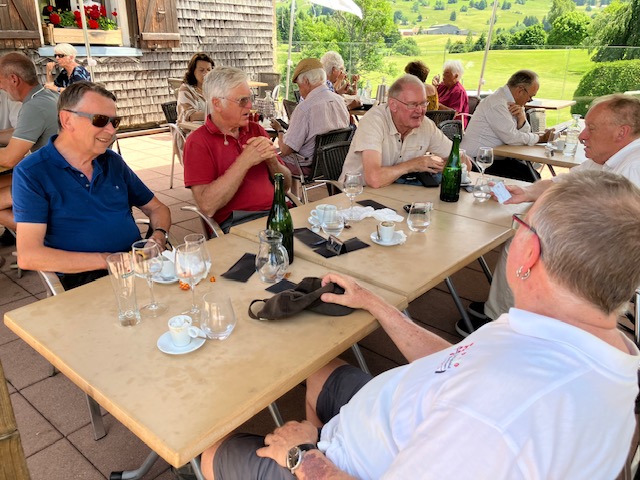
And so back to the cars and a short drive to an excellent lunch at the Golf du Rochat where we were joined by Richard S.
We had been warned that the visit to the cheese maturing cellars could be cold at around 10°C and we mostly had an extra layer, which was hardly necessary – it was such a relief getting out of the heat. There were about 40 people on our visit, mostly French nationals and our guide spoke an excellent French but fast and to his majority audience which made it challenging to some of us. There are some 75.000 cheeses maturing in the galleries and films were used to show how they were treated over several months. Towards the end there was a tasting of 12-, 18- and 24-months old cheeses, each with their distinct tastes. A most interesting visit.
At the end we were all asked from where in France we came (most from the Jura department) and as an after thought were there any foreigners. The British were answered by a quip on cheddar cheese; our Australian friend received a round of applause – I don’t know what the world is coming to!
Mark Warren